
Hebrews 11:1-40
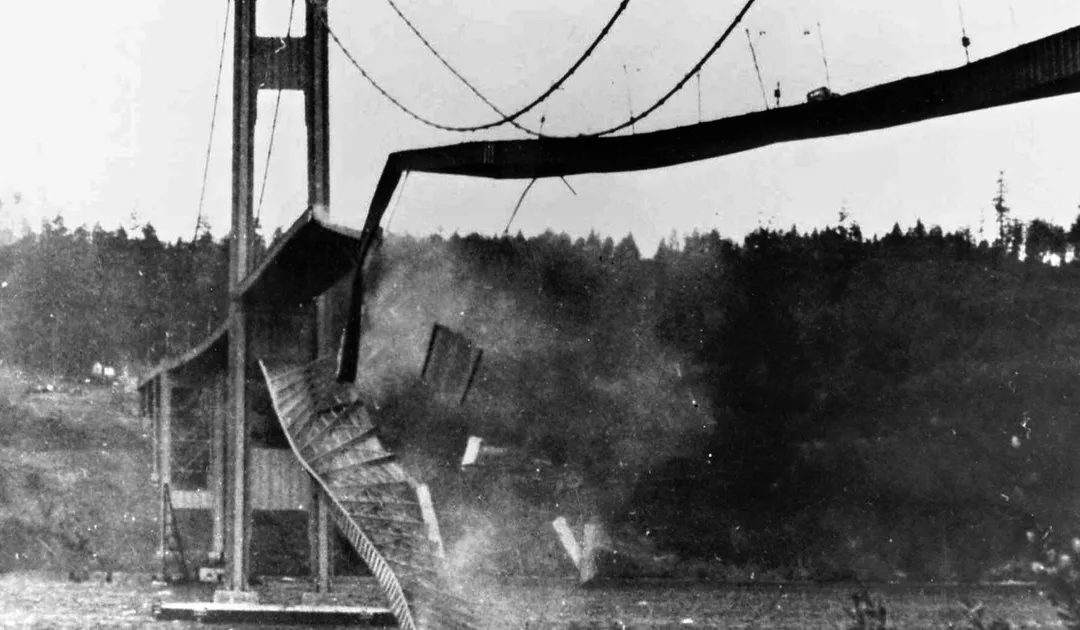
There’s something unsettling about watching the Tacoma Narrows Bridge collapse in 1940 (you can see the video here: Tacoma Bridge Collapse). The third longest suspension bridge in the world, nicknamed “Galloping Gertie” because of its unusual swaying motion, actually became a tourist attraction. People would walk across it, feeling the rhythmic movement beneath their feet, confident it would hold. Until it didn’t.
What’s remarkable isn’t just the collapse itself—it’s that within an hour before the bridge fell, people were still crossing it. They had faith in something that was about to fail catastrophically. They trusted in human engineering that couldn’t withstand the test.
This raises a profound question: What are we placing our faith in?
The Substance of Things Hoped For
Hebrews 11:1 defines faith as “the substance of things hoped for, the evidence of things not seen.” Faith isn’t wishful thinking or blind optimism. It’s confidence in something real, even when we can’t see it with our physical eyes. It’s evidence that exists beyond the visible realm.
The chapter that follows this definition reads like a hall of fame—or perhaps more accurately, a hall of faith. Name after name of Old Testament figures who believed God and acted on that belief. But here’s what makes this list so powerful: these weren’t perfect people. They were flawed, complicated individuals who made mistakes, experienced failures, and carried their own baggage.
Abraham lied about his wife to save his own skin. Noah got drunk after the flood. Samson had serious moral failings. Rahab was a prostitute. Yet the writer of Hebrews declares that “God is not ashamed to be called their God.”
Let that sink in. God is not ashamed of imperfect people who have faith in Him.
Faith That Acts
The difference between these biblical heroes and mere believers is simple: they did something about their faith. Faith wasn’t just an intellectual assent or an emotional feeling—it was a catalyst for action.
Abel offered the right sacrifice. Noah built an ark when there was no sign of rain. Abraham left his home without knowing his destination. Moses forsook the riches of Egypt. Rahab hid the spies. Each person’s faith produced tangible results in their lives.
James put it bluntly: “Faith without works is dead.” Not that we earn salvation through our actions, but genuine faith naturally expresses itself through what we do. It’s like saying you believe a chair will hold you—the proof is in the sitting.
Consider Jason Brown, an NFL center making millions of dollars, who felt called to leave professional football and become a farmer to feed the poor. He had to learn farming from scratch, leaving behind everything he’d worked for. Why? Because he believed God wanted him to serve in that way, and his faith demanded action.
When Faith Costs Everything
The most challenging aspect of faith isn’t believing when things are easy—it’s continuing to believe when obedience becomes costly.
Abraham was asked to leave his home and go to a place God wouldn’t even name. Imagine packing up your entire life when someone says, “Just start walking, and I’ll tell you when to stop.” That’s not comfortable faith; that’s radical trust.
Then came the ultimate test: offering up his son Isaac. God asked Abraham to sacrifice the very promise through which all God’s other promises would be fulfilled. It made no logical sense. Yet Abraham moved forward, trusting that even if he had to complete the sacrifice, God could raise Isaac from the dead.
The missionary Jim Elliot, along with four other men, went to reach the Huaorani tribe in Ecuador in the 1950s. They were killed by the very people they came to serve, leaving behind widows and orphaned children. What a waste, many thought.
But the story didn’t end there. Some of the widows returned to continue the work. The tribe members who killed their husbands eventually came to faith in Christ. Today, there’s a thriving church among the Huaorani people—all because some people decided that following God was worth any cost.
Jim Elliot wrote: “He is no fool who gives what he cannot keep to gain what he cannot lose.”
The Unfinished Stories
Perhaps the most sobering part of Hebrews 11 comes near the end. After listing triumph after triumph—kingdoms subdued, lions’ mouths stopped, fire quenched, armies defeated—the writer pivots with one word: “Others.”
Others were tortured. Others were mocked and imprisoned. Others were stoned, sawn in half, killed with swords. They wandered in deserts and mountains, living in caves, destitute and afflicted. The world wasn’t worthy of them.
These faithful people didn’t get their miracle. They didn’t escape. They didn’t see the happy ending in their lifetime.
Yet the text says they all “obtained a good report through faith.” They’re in the same hall of faith as those who saw miraculous deliverance. Why? Because they kept believing even when they couldn’t see the results.
They were looking forward to something better—a city whose builder and maker is God. They understood that the reward isn’t always in this life. Sometimes faithfulness looks like simply showing up, day after day, even when you don’t have all the answers, even when prayers seem unanswered, even when the miracle doesn’t come.
The Better Promise
Here’s the remarkable truth: we have something better than all those Old Testament heroes. They were looking forward to something they never saw in their lifetime. They died in faith, not having received the promises, but seeing them from afar.
What were they looking for? Jesus.
We live on this side of the cross and the empty tomb. The promise they anticipated has been fulfilled. The kingdom has arrived. Salvation is available. We have the complete revelation of God in Christ and in Scripture.
If they could live faithfully without seeing Jesus, how much more should we live faithfully having received Him?
Getting in the Wheelbarrow
In the 1850s, Charles Blondin famously walked across Niagara Falls on a tightrope, sometimes carrying a wheelbarrow. One day he asked the crowd, “How many believe I can cross with someone in the wheelbarrow?”
Everyone cheered. “We believe!”
“Then who will get in?”
Silence.
Believing God can do something is easy. Believing God will do something for someone else is easy. But when God says, “Now I want you to step out, to trust me with this area of your life, to obey even when it’s uncomfortable”—that’s when faith becomes real.
True faith isn’t just agreeing that the tightrope walker is skilled. It’s climbing into the wheelbarrow.
What is God asking you to do? Where is He calling you to step out of your comfort zone? Maybe it’s forgiving someone who hurt you deeply. Maybe it’s serving in a way you’ve never considered. Maybe it’s giving sacrificially. Maybe it’s having that difficult conversation. Maybe it’s simply trusting Him with a situation you can’t control.
The invitation is clear: don’t just believe—act. Don’t just know about God—trust Him enough to do what He says, even when it’s hard, even when you can’t see the outcome, even when it costs you something.
Because unlike a suspension bridge built by human hands, God never fails. He’s not ashamed to be called your God, regardless of your past or your imperfections. He’s simply looking for people willing to take Him at His word and live like they actually believe it.
That’s faith. And it changes everything.