
Genesis 37:1-11
We all carry family stories. Some are filled with warmth and laughter, while others hold pain, disappointment, and unresolved conflict. If you grew up with brothers or sisters, you know the unique tension that can exist between siblings—the competition, the comparisons, the fights over territory (sometimes literally marked with masking tape down the middle of a bedroom).
Family relationships can be complicated. They can be messy. And sometimes, they can feel beyond repair.
But what if God specializes in broken families? What if the very dysfunction we’re ashamed of is exactly where God wants to work?
The Original Sibling Rivalry
Sibling rivalry isn’t a modern phenomenon. It’s as old as humanity itself. The very first two brothers—Cain and Abel—ended in tragedy. And the pattern continued throughout biblical history.
One of the most compelling stories of family dysfunction is found in Genesis 37, where we meet Joseph and his eleven brothers. This wasn’t just a case of typical sibling squabbles. This was a family situation so toxic that it nearly ended in murder.
Joseph was seventeen years old, the favorite son of his father Jacob. The Bible doesn’t hide the dysfunction—it tells us plainly that Jacob “loved Joseph more than all his children” and gave him a special coat of many colors to prove it. When favoritism is that obvious, it creates a breeding ground for resentment.
To make matters worse, Joseph had dreams—literal dreams from God—where his brothers’ sheaves of grain bowed down to his. He shared these dreams with his family, and his brothers hated him even more. The jealousy grew so intense that when they found Joseph alone one day, they threw him into a pit and sold him into slavery, telling their father he had been killed by wild animals.
The Poison of Favoritism
Favoritism fuels family division. When parents show obvious preference for one child over another, it creates wounds that can last a lifetime. Children compete for attention, affection, and approval. When one consistently receives more, the others feel the sting of rejection.
Here’s the truth we need to embrace: God shows no favoritism. Acts 10:34 reminds us that “God is no respecter of persons.” He doesn’t love His obedient children more than His struggling ones. His love isn’t based on performance or achievement. Every child of God is equally loved, equally valued, equally precious.
If we claim to follow God, we must resist the temptation to play favorites—whether with our own children, grandchildren, or within our church families. Every person has unique strengths and weaknesses. Every individual deserves to be celebrated for who they are, not compared to someone else.
For those who grew up feeling like they weren’t the favorite, who watched a sibling receive more attention, more praise, more love—that wound is real. But don’t let it turn into bitterness. Bring that pain to God. He sees you. He values you. And His opinion matters more than anyone else’s.
The Danger of Jealousy
Jealousy is insidious. It starts small, a whisper in the heart: “Why do they have what I don’t?” It grows quietly, feeding on comparison and resentment. And if left unchecked, it eventually demands expression—often in destructive ways.
James 3:16 warns us: “For where envying and strife is, there is confusion and every evil work.” Jealousy doesn’t just hurt us internally; it creates chaos in our relationships and communities.
Joseph’s brothers looked at his coat, his dreams, his father’s affection, and they wanted it all. That jealousy festered until it erupted into violence. Sin begins in the heart, but it rarely stays there.
The antidote to jealousy is gratitude. When we focus on what we lack, we spiral downward. But when we choose to celebrate others’ successes and thank God for what we have, jealousy loses its grip.
Here’s a perspective shift: while you’re looking at someone else wishing you had their life, someone else is probably looking at you with the same longing. Comparison is a losing game because everyone has something someone else wants.
God’s Redemptive Purpose
Now here’s where Joseph’s story becomes truly remarkable. What his brothers meant for evil, God meant for good.
Joseph ended up in Egypt, where through a series of events, he rose to become second-in-command to Pharaoh. When a severe famine struck the region, Joseph’s position allowed him to save countless lives—including his own family. The very brothers who sold him into slavery eventually came to Egypt desperate for food, and they bowed down before Joseph, unknowingly fulfilling the dreams they had mocked years earlier.
In Genesis 50:20, Joseph tells his brothers: “You thought evil against me, but God meant it unto good, to bring to pass as it is this day, to save much people alive.”
This is the hope for every broken family: God can use family pain for His purpose.
Your family may be dysfunctional. The hurts may be deep. The relationships may feel beyond repair. But God specializes in taking broken things and making them beautiful. He can work even through sinful choices and painful circumstances to accomplish His purposes.
Romans 8:28 promises that “all things work together for good to them that love God, to them who are called according to his purpose.” All things. Even the family dysfunction. Even the betrayal. Even the years of silence and separation.
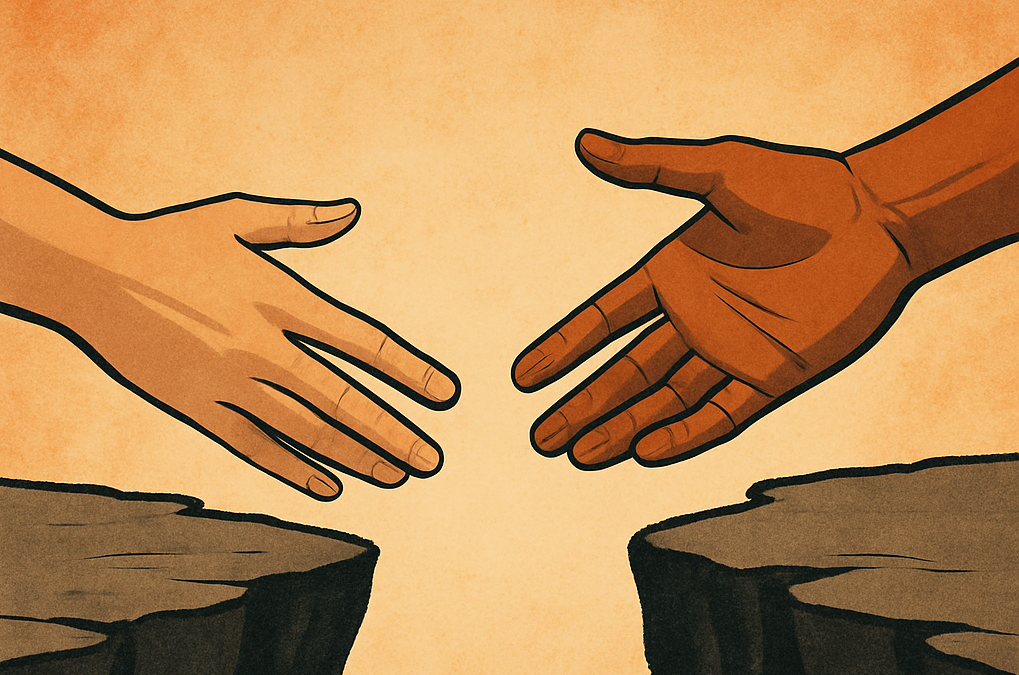
Building Bridges, Not Fences
There’s a powerful image to consider: in our relationships, we’re either building bridges or building fences. When we’re hurt, our natural instinct is to build a fence—to protect ourselves, to create distance, to ensure we can’t be hurt again. And if the fence isn’t high enough, we keep building it higher.
But God built a bridge for us when we were separated from Him by sin. That bridge was made of wood—a cross—where Jesus died so we could be reconciled to the Father.
If God built a bridge to reach us, shouldn’t we be in the business of building bridges too?
Maybe there’s a relationship in your family that needs a bridge. Maybe it’s time to take a baby step toward reconciliation. Maybe there’s someone you need to forgive—not because they deserve it, but because holding onto bitterness is destroying you.
Forgiveness doesn’t mean what happened was okay. It doesn’t require the other person to apologize or change. Forgiveness is a choice you make for your own freedom, releasing the poison of resentment before it consumes you.
There Is No Perfect Family
Let’s be honest: there is no perfect family. If you’re waiting for your family to look like a fairytale before you find peace, you’ll be waiting forever. Real families are messy. They disappoint us. They hurt us. They fall short of our expectations.
But while there’s no perfect family, there is one perfect Father—God. And when we bring our broken family situations to Him, He can work in ways we never imagined.
Don’t let family hurt define your future. Don’t let jealousy steal your joy. Don’t let unforgiveness build walls that keep you trapped in bitterness.
God is working, even when you can’t see it. Trust Him with your family. Pray for the prodigals. Forgive the ones who hurt you. Celebrate the successes of others. Guard your heart against comparison and jealousy.
And remember: God’s family is always open. When you trust Jesus Christ as your Savior, you become part of a family that will last forever—a family where the Father loves each child perfectly, equally, and eternally.
Your earthly family may be broken, but your heavenly family is secure. And that makes all the difference.