
Mark 8:34-38
Imagine someone offers you ten million dollars. The catch: you die at midnight tonight. Would you take it?
Most people would not even hesitate before saying no. The answer feels obvious. One day of life is worth more than ten million dollars. And yet, if we are honest with ourselves, many of us are quietly trading something far more valuable than ten million dollars for things that will not last a single lifetime, let alone an eternity.
That is the uncomfortable question sitting at the heart of Mark chapter 8. Jesus asks it plainly: what does it profit a man if he gains the whole world but loses his own soul? And then he follows it with a second question that cuts just as deep: what would a man give in exchange for his soul?
These are not questions designed to make us feel good. They are questions designed to wake us up.
The Paradox We Keep Ignoring
There is a story from the sinking of the Titanic about a first-class passenger named Arthur Puchin. When the ship began going down, he returned to his cabin where he had the equivalent of roughly $300,000 in jewels, stocks, and cash sitting in a box. He looked at it, left it all behind, grabbed a small good luck charm and three oranges, and walked back out. He understood in that moment what mattered. The money was not going to help him survive. The oranges might.
Most of us never face a moment that dramatic. But every single day, we face smaller versions of the same choice. We make decisions based on what benefits us, what pays the most, what feels the best, what gains us the most ground in this life. And there is nothing inherently wrong with planning, saving, working hard, or enjoying the good things life offers. The problem comes when those pursuits quietly push everything else out of first place.
Jesus lays out a paradox in Mark 8 that sounds almost backwards when you first hear it. He says in verse 35 that whoever tries to save his life will lose it, but whoever loses his life for his sake and the gospel’s will save it. In other words, the tighter you grip this life, the more of it ultimately slips away. It is only when you open your hands and surrender it that you actually get to keep something worth keeping.
Three Invitations in One Passage
When Jesus calls the crowd and his disciples together in this passage, he gives them three specific invitations wrapped inside one challenge. He tells them that anyone who wants to follow him must deny himself, take up his cross, and follow.
Denying yourself does not mean you can never enjoy a good meal or take a vacation or pursue a career you love. It means that your desires move from the driver’s seat to the passenger seat. The question shifts from “what do I want out of this?” to “what does Jesus want from this?” That is a small shift in posture that changes everything about how you move through the world.
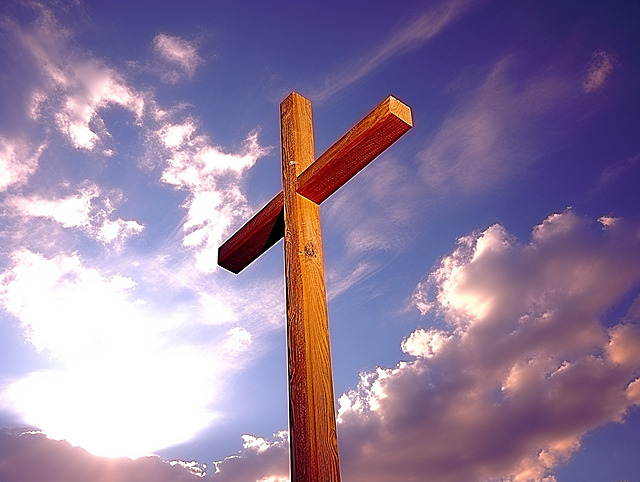
Taking up a cross was not a decorative image in the first century. It meant walking toward death. Jesus is asking for a willingness to surrender completely, to hold your own life loosely enough that it could be laid down if he asked for it. For most people in comfortable circumstances, that will never mean a literal death. But it does mean dying to the habit of putting yourself first in every decision, every relationship, every ambition.
And then following. Letting him lead. Through the good seasons and the devastating ones. Through the valleys and the mountaintops. Trusting that the path he is walking you down is better than the one you would have chosen for yourself.
You Cannot Take It, But You Can Send It Ahead
Here is the thing about everything you accumulate in this life: none of it crosses over. The house, the retirement account, the awards, the reputation, the title, the trophy sitting on the shelf. When life ends, all of it stays behind. Tom Brady, at 27 years old, having already won three Super Bowl championships, sat down for an interview and said that there had to be something more than this. He had grabbed everything the world said would satisfy, and he was still looking for what was missing.
The soul is not built for this world alone. It is the eternal part of a person, the part that outlasts everything else. And because it lasts forever, what you do with it matters more than any other decision you will ever make.
But here is the encouraging part. While you cannot take your earthly gains with you, you can invest in things that outlast you. Teaching a child about Jesus. Supporting the spread of the gospel to places that have never heard it. Using your gifts and your time and your resources for something that keeps going long after you are gone. That kind of investment does not depreciate. It compounds into eternity.
The Accounting That Is Coming
At some point, the books close. Every business has a fiscal year-end. Every farmer eventually tallies up the harvest. And every human life eventually reaches its final accounting.
The question Jesus is pressing on in this passage is not whether you have lived a comfortable life or an impressive one. It is whether you have lived a surrendered one. Whether you were willing to let him lead. Whether you chose, day after day, to follow him even when it was inconvenient, even when it cost you something, even when it was easier to stay quiet or blend in.
The good news is that this is not a one-time decision. It is a daily one. Every morning is another opportunity to wake up and say, not my agenda today, but yours. Every failure is followed by another chance to get back up and keep walking.
The world will offer you everything it has. Jesus simply asks: what is your soul worth to you?